
Reference
Yixing & gongfu tea glossary
PO/ET Studio5 min read
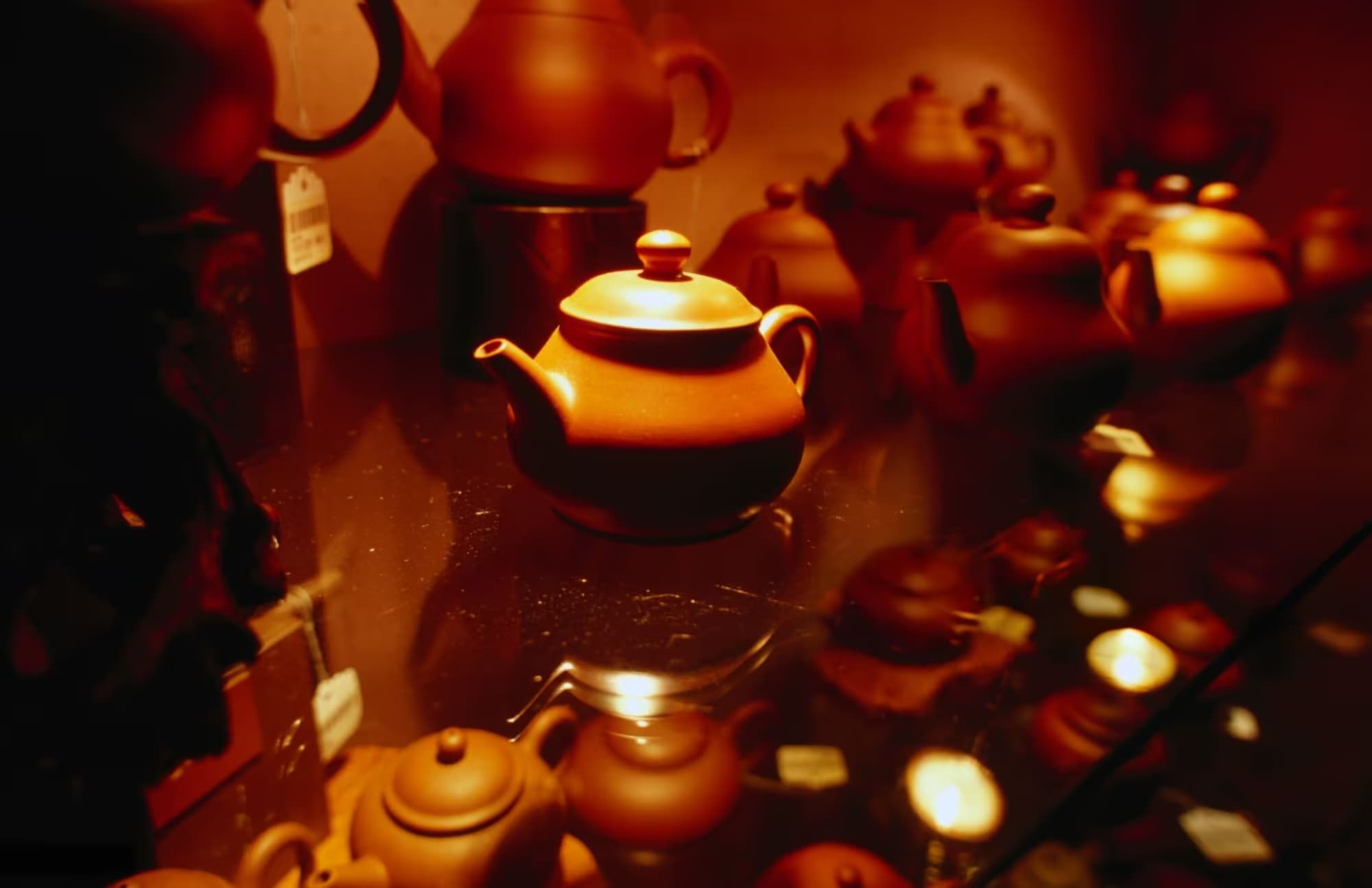
Yixing teaware comes wrapped in Chinese terms — clay names, pot forms, and tea-ritual words that rarely get translated. This glossary defines the ones you will meet on our product pages and across the gongfu tea world, in plain English.
Reading the names on a pot
Most Yixing pots are named for two things: the clay they are thrown from and the classic form they follow. “Zhu Ni Xishi,” for example, is an Xishi-form pot in cinnabar clay. The glossary below splits the vocabulary into clay types, pot forms, and tea-ritual terms.
Glossary
- Yixing宜兴yí xīng
- A city in Jiangsu province, China, and the only source of true zisha clay. ‘Yixing teapot’ means a teapot made from this regional clay.
- Zisha紫砂zǐ shā
- ‘Purple sand’ — the family of mineral-rich, iron-bearing stoneware clays from Yixing, fired unglazed so the pot can breathe and season.
- Zi Ni紫泥zǐ ní
- Purple clay, the classic and most common zisha body. Dense and forgiving, it fires a warm brown-purple and deepens with tea.
- Di Cao Qing底槽清dǐ cáo qīng
- A prized seam of zi ni from the bottom layer of the Huanglongshan ore, valued for its even, settled brown-red tone.
- Zhu Ni朱泥zhū ní
- Cinnabar clay — high in iron, fires a glowing oxblood red. It shrinks heavily in the kiln, so well-made zhu ni pots are difficult and prized.
- Duan Ni段泥duàn ní
- A sandy, buff-coloured zisha blend that fires from raw-biscuit beige toward honey and gold; includes variants like Golden Duan (黄金段).
- Ben Shan Lü Ni本山绿泥běn shān lǜ ní
- ‘Original-mountain green clay,’ a rarer zisha that fires a pale greenish-beige. Despite the name it is not bright green.
- Gongfu cha功夫茶gōng fu chá
- The Chinese ‘skill tea’ method: small pot, many short infusions, and full attention — the style of brewing Yixing pots are built for.
- Gaiwan盖碗gài wǎn
- A lidded brewing cup used in gongfu tea as an alternative to a teapot, letting you brew, steep, and pour from one vessel.
- Wen xiang bei闻香杯wén xiāng bēi
- The tall ‘aroma cup.’ Tea is poured in, tipped into the drinking cup, and the empty cup is cupped to the nose to read the lingering scent.
- Patina包浆bāo jiāng
- The soft, deepening sheen that unglazed zisha develops as it absorbs tea over months and years — the goal of seasoning a pot or tea pet.
- Ti liang提梁tí liáng
- An ‘overhead-handle’ teapot, where the handle vaults across the top in a bridge rather than sitting at the side.
- Shi Piao石瓢shí piáo
- The ‘stone-ladle’ form — a near-triangular classic pot prized by Qing-dynasty scholars for its honest, unornamented geometry.
- Xishi西施xī shī
- A round, full-bodied teapot form named for a legendary Chinese beauty; one of the most popular classic Yixing shapes.
- Tea pet茶宠chá chǒng
- A small unglazed Yixing clay figure kept on the tea tray and ‘raised’ on leftover tea until it develops a patina.